
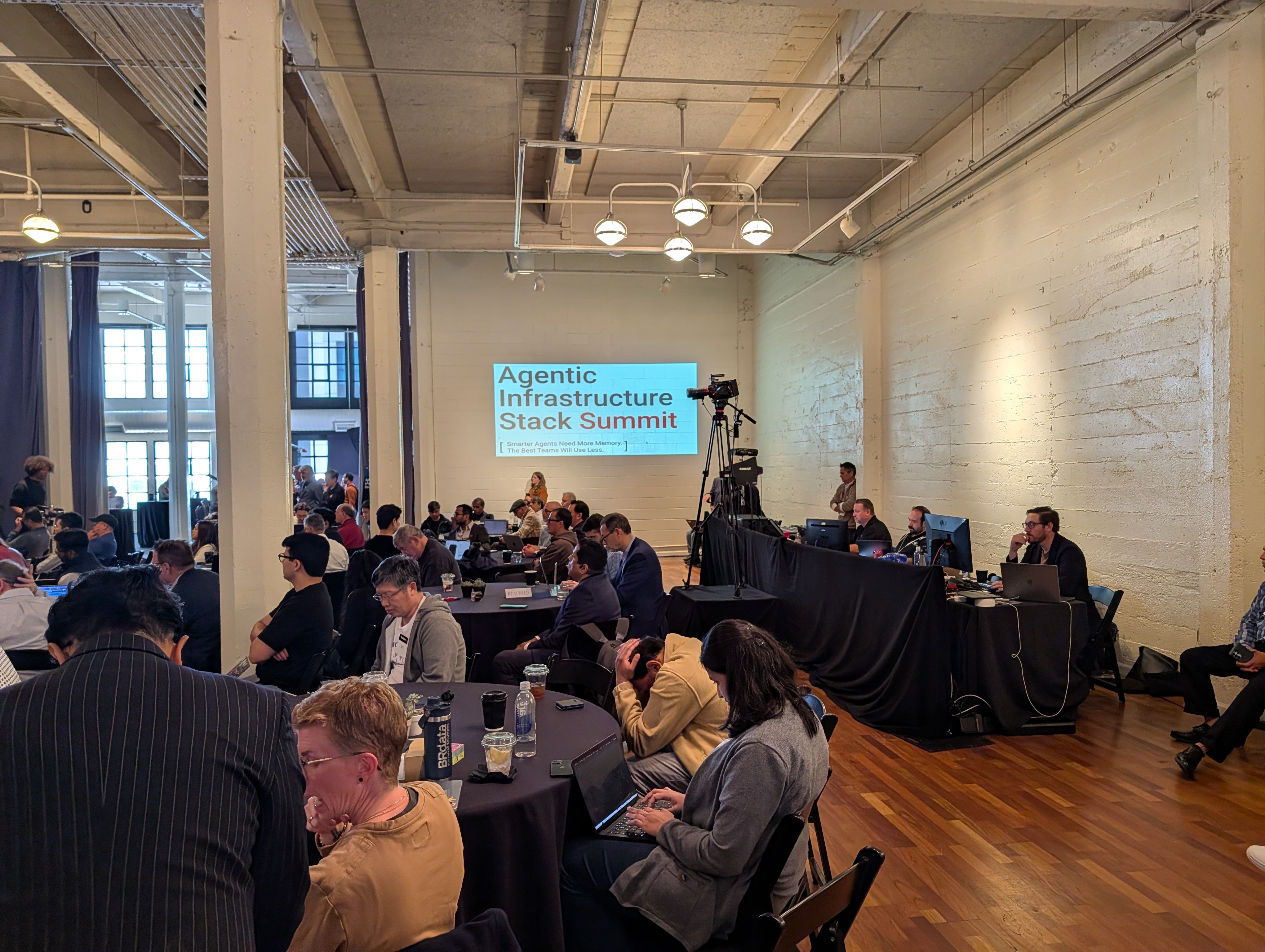
The mood: make agents work in the business
The strongest signal from VentureBeat’s October 28 summit in San Francisco was a focus on what happens after the demo. The program put orchestration, memory and context, inference economics, and AI factory architecture at the center of the day. Taken together, those themes suggest a move toward operating systems that can act reliably, within a budget and with clear responsibility.
That is a reading of this summit’s priorities, rather than a claim about every AI team in San Francisco. For readers deciding what to build or buy, it is a useful shift in the questions to ask: can the system finish the job, adapt when conditions change and explain the resulting cost and decisions?
For founders, the implication is to connect an agent’s capabilities to a specific customer outcome. Engineering and security teams need to understand the whole workflow. Enterprise buyers should ask for evidence beyond a successful demonstration.
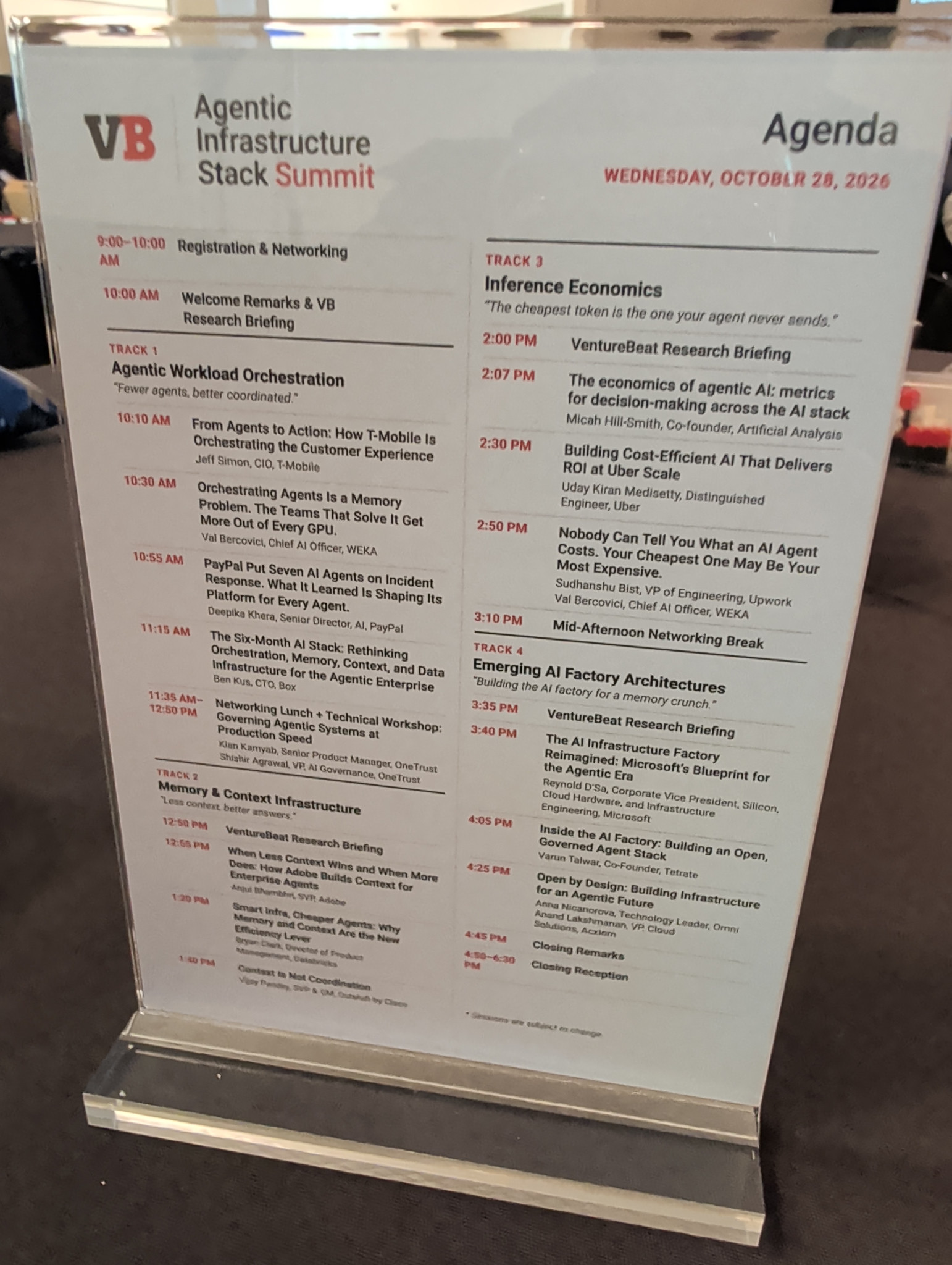
Explore the summit’s scheduled program
Cost per completed task matters more than a cheap call
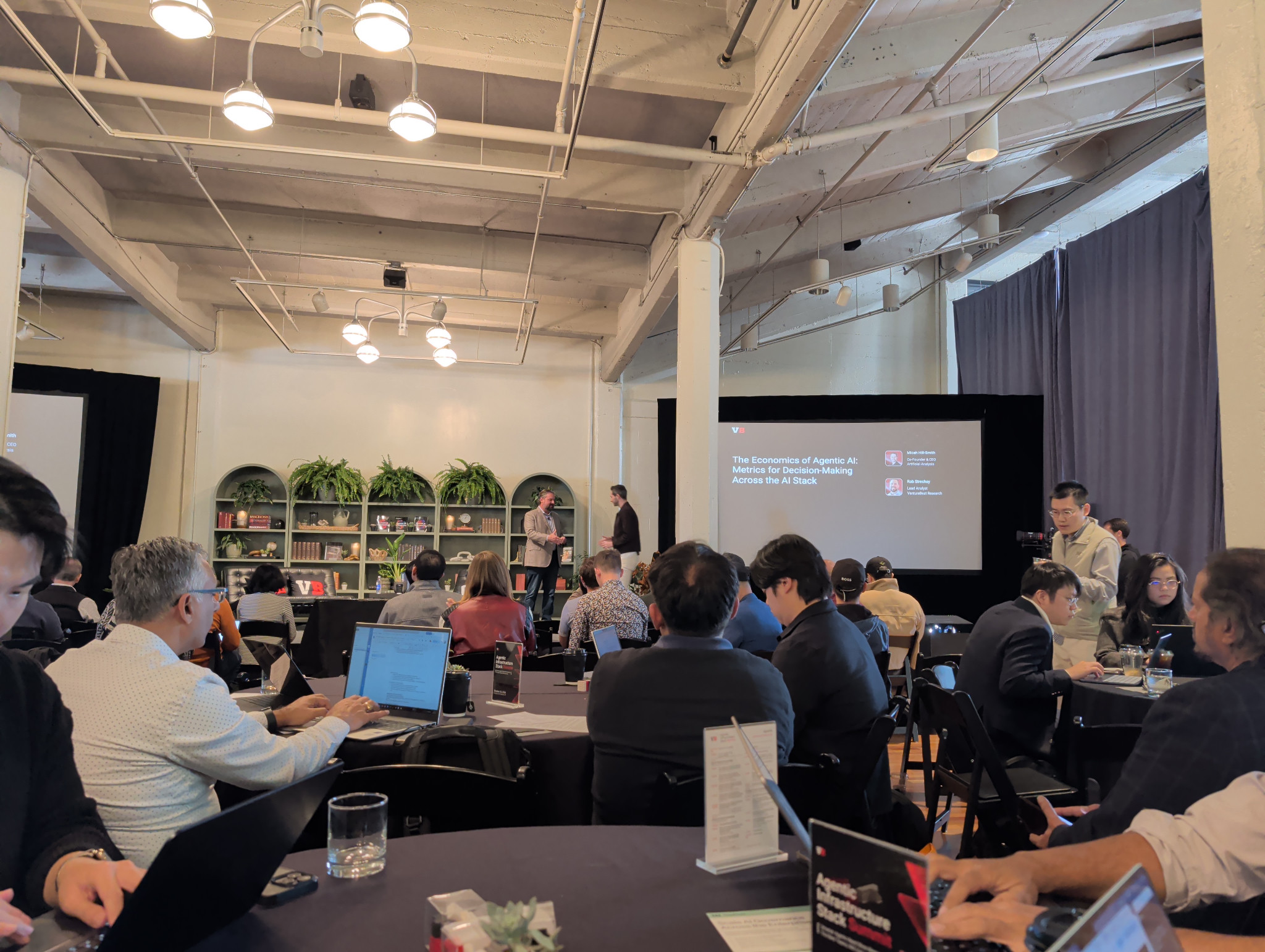
A low model price does not establish that an agent workflow is inexpensive. Repeated attempts, unnecessary context, human correction and unused reservations can all change the cost of a completed task. The economics theme points toward a more useful comparison: what does it cost to reach an acceptable outcome?
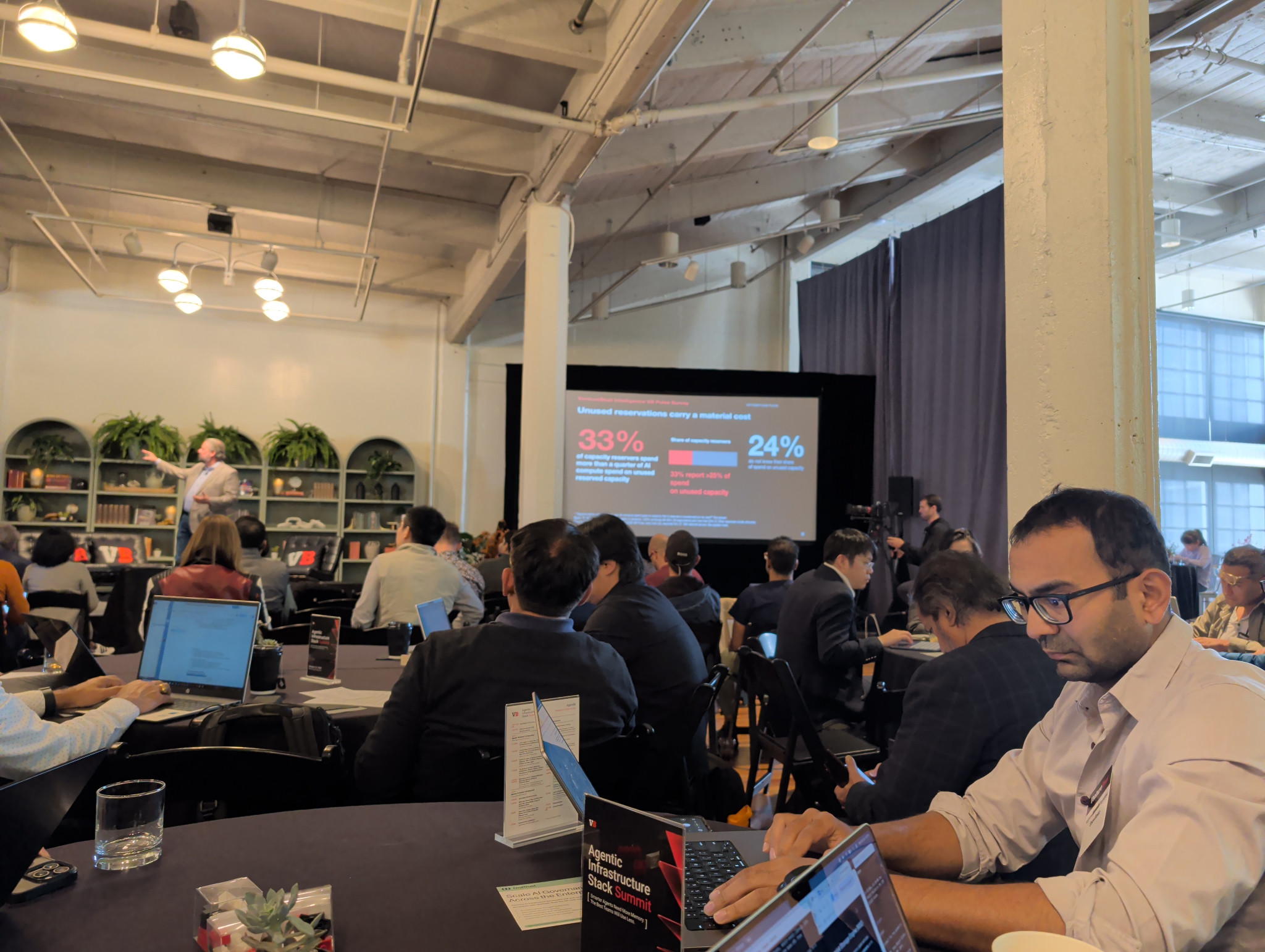
The VB Pulse Survey figures presented at the summit also expose a capacity planning question. Buying compute is one decision; putting that capacity to useful work is another.
| Figure | What the slide reports |
|---|---|
| 33% | Of capacity reservers spend more than a quarter of their AI compute spend on unused reserved capacity. |
| 24% | Report that they do not know how much is spent on unused capacity. |
Source: VentureBeat Intelligence, VB Pulse Survey. These are reported responses from capacity reservers. The 33% describes respondents, not the overall share of compute wasted. Sample size and full methodology could not be verified from the available slide.
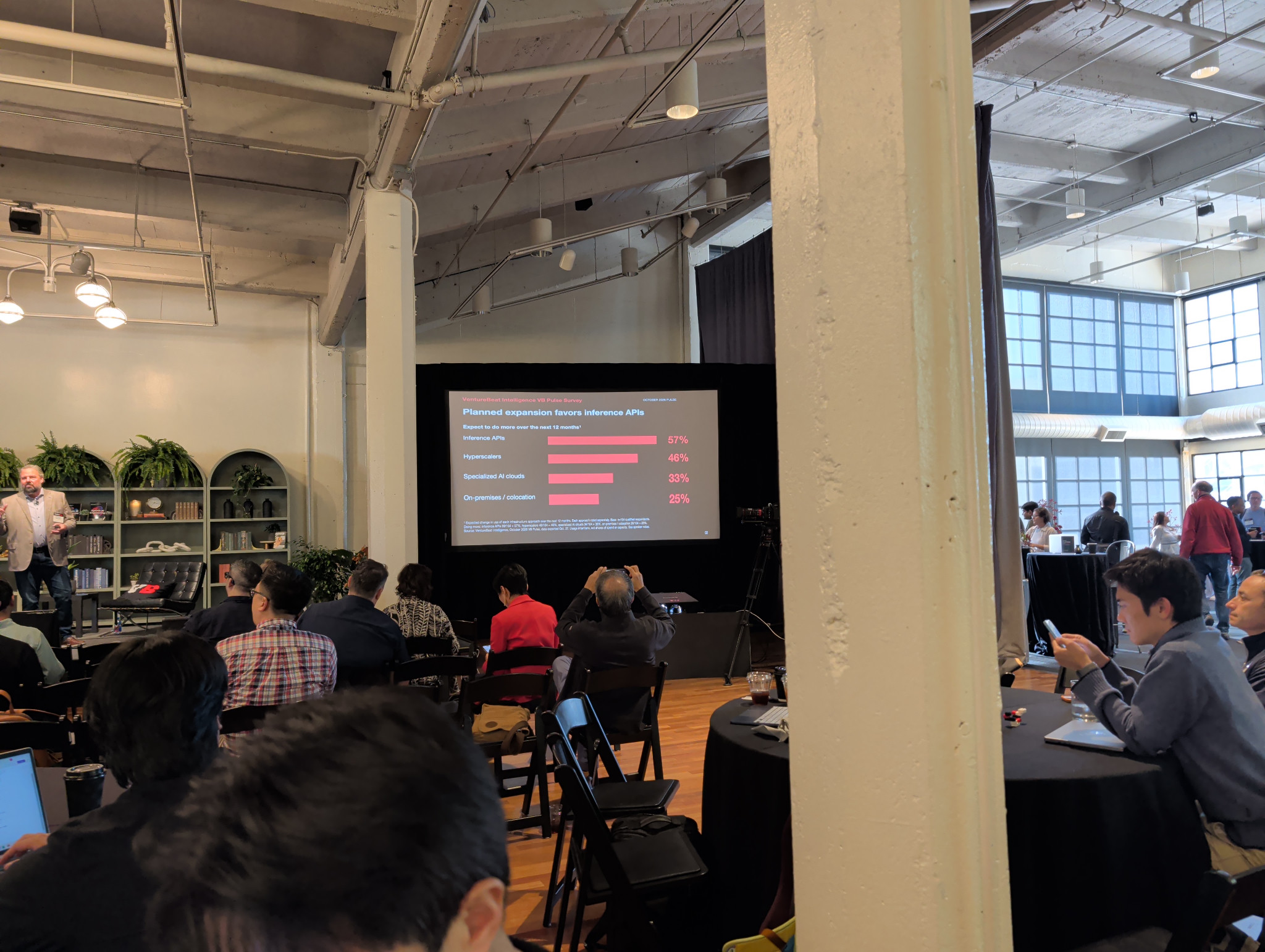
A separate slide showed planned increases in usage across several infrastructure approaches:
| Approach | Reported percentage |
|---|---|
| Inference APIs | 57% |
| Hyperscalers | 46% |
| Specialized AI clouds | 33% |
| On premises / colocation | 25% |
Source: VentureBeat Intelligence, VB Pulse Survey. Each approach was rated separately. The figures describe intentions over the next 12 months, not market share or shares of spending or capacity. They should not be added together. Sample counts and full methodology remain unverified.
The practical lesson is to make the bill explainable before expanding it. Founders should ask which workflow produces the return. Engineering teams should separate successful work from retries and idle capacity. Buyers should compare a representative workload, including failures and correction, rather than a provider’s token price alone.
Ask your team: Can we calculate the total cost per accepted result, including unsuccessful attempts, and identify who owns unused commitments?
Useful context is becoming a design discipline
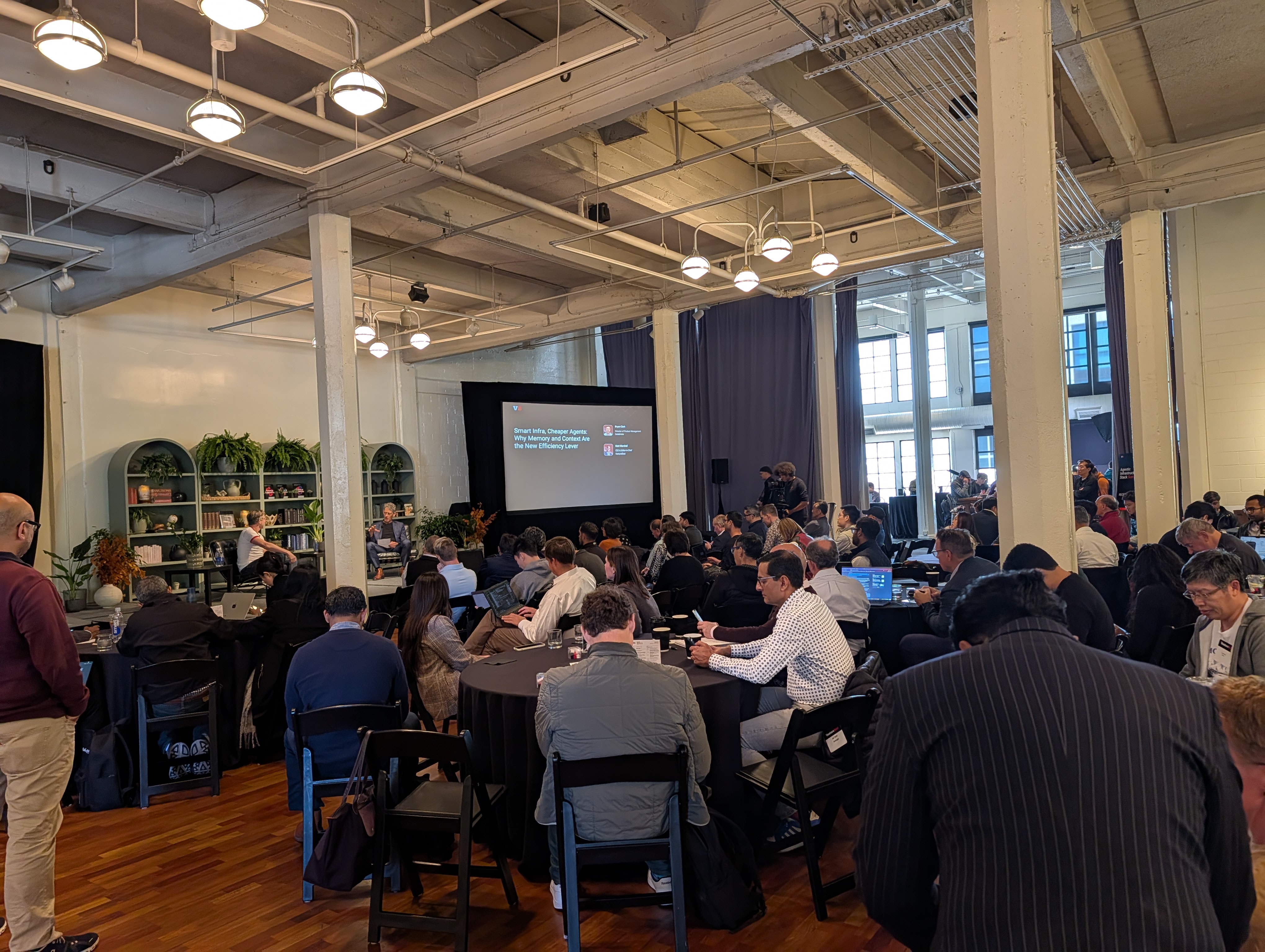
The memory and context track framed efficiency as a question of what an agent needs to know. More history can include a crucial constraint, but it can also carry irrelevant material or an outdated assumption. Less context can reduce the information processed while leaving the agent without evidence it needs.
A practical response is to test context selection alongside model selection. Compare a focused evidence packet with a larger history on the same tasks. Measure answer quality, task completion, tokens and latency together. Reducing tokens is useful only if the workflow still meets its quality requirements.
Memory also needs a distinction between confirmed facts and the agent’s own inferences. When another agent picks up the work, it should be able to tell what is known, what is estimated and what has changed.
Ask your team: Which information must survive a handoff, which assumptions expire, and what evidence shows that our context strategy improves the outcome?
Governance belongs inside the operating workflow
The program included Tetrate’s session on an open, governed agent stack and Microsoft’s AI infrastructure architecture session. Their placement alongside economics and orchestration is a useful signal: operating an agent system involves controls as well as model capability. The agenda establishes the scheduled topics, not the details of every talk.
An AI gateway is one possible control point. Tetrate’s documentation describes routing and reliability controls around model traffic. For a platform team, the useful questions are which calls pass through it, where budgets and policies apply, and whether request records support investigation. Gateway coverage should be demonstrated, rather than inferred from the presence of a gateway.
Permission to call a model also needs to be distinguished from permission to change a customer record, issue a refund or send a message. Those actions need authority in the system where they occur.
Temporal security is a related design question to explore, rather than a named topic in the printed program: what happens when permission or context changes between planning and execution? An agent might prepare a customer update, wait in a queue and then act after access has been revoked. A delayed or retried action needs to follow the current authorization policy.
Ask your team: If access changes while an agent is waiting, can we show what happens before it acts? Who owns that decision, and where is it recorded?
Coordination matters more than the agent count
Vijoy Pandey’s scheduled session, “Context Is Not Coordination,” captures another important theme. The takeaway from his discussion can be paraphrased as a move from connecting systems that exchange data toward connecting intelligence that interprets it and acts. Cisco’s published Internet of Cognition direction similarly emphasizes shared intent, context and knowledge.
A successful message exchange proves that communication worked. It does not establish that the agents share a goal or understand how one decision affects another. Adding more specialists makes that coordination problem worth testing explicitly.
Three sensible plans can still produce a failed launch
Consider an illustrative product launch. A demand agent recommends an early date because customer interest is strong. A manufacturing agent plans around capacity. A delivery agent schedules shipping around warehouse readiness. Each plan can be sensible locally and still conflict with the customer promise.
| Agent | Local priority | Question for the team |
|---|---|---|
| Demand | Capture customer interest early | Can we fulfill the promise? |
| Manufacturing | Use capacity efficiently | Does this batch support the launch date? |
| Delivery | Ship when stock is ready | Does arrival match the customer commitment? |
When manufacturing discovers a delay, the other agents need to revise the plan together. A system that simply passes the new date along may leave an old promise in place. The useful test is whether dependent decisions change before anyone commits externally.
Make assumptions, authority and disagreements visible
Give the team a shared outcome, such as customers receiving the promised product within an agreed window. Make the important constraints explicit. An estimate should remain distinguishable from a confirmed date, and dependent plans should acknowledge changes.
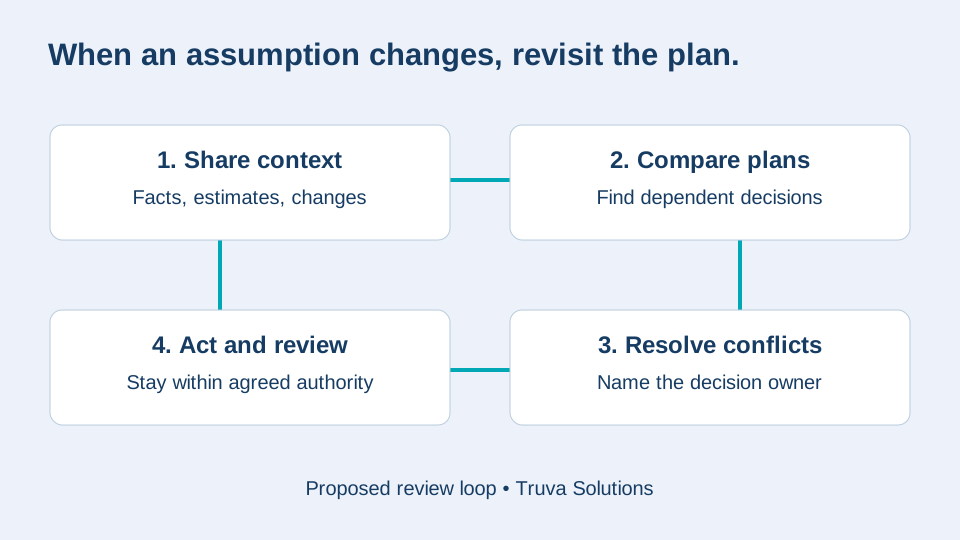
Delegation also needs a stopping point. An agent may recommend a revised launch date without authority to promise it to customers. Name the person or authorized workflow that can accept the tradeoff. Record the decision and the evidence behind it.
For enterprise buyers, this is a concrete demonstration to request: change an assumption halfway through a workflow and watch how the system identifies conflicts, seeks missing information and escalates decisions beyond its authority.
What to test before expanding the rollout
Start with one workflow and agree on success before the pilot. Change a supplier date, revise a demand estimate or revoke a permission while work is queued. Keep failed runs in the results.
| Measure | How to calculate it |
|---|---|
| Shared outcome success | Runs meeting all agreed constraints divided by total test runs. |
| Context update delay | Time from an assumption changing to every affected plan acknowledging it. |
| Unresolved commitments | Count conflicting commitments still present when execution begins. |
| Decision trace coverage | Consequential decisions with evidence and an accountable owner divided by all consequential decisions. |
Pair these coordination measures with cost per accepted result and the context tests described above. Targets should reflect the workflow’s consequences, not an arbitrary industry benchmark.
The summit’s program points toward a useful standard for the next agent review: demonstrate a system that completes valuable work, uses resources deliberately and stays accountable when the plan changes. That gives founders a clearer product promise, engineering teams a testable operating goal and buyers better evidence for a decision.
References
- VentureBeat: Agentic Infrastructure Stack Summit, October 28, 2026, San Francisco. The scheduled program and session slides are reproduced above.
- VentureBeat Intelligence, VB Pulse Survey: unused reserved capacity and planned expansion slides. Figures are transcribed with the limitations stated beside each table.
- Cisco: Vijoy Pandey. Official role and description of shared intent, context and knowledge.
- Outshift: Internet of Cognition. Further reading on Cisco’s proposed direction.
- Tetrate: What is an AI gateway?. Background on gateway capabilities.
The trend analysis and practical recommendations are editorial interpretation. The launch and delayed action scenarios are illustrative, not reported customer results.