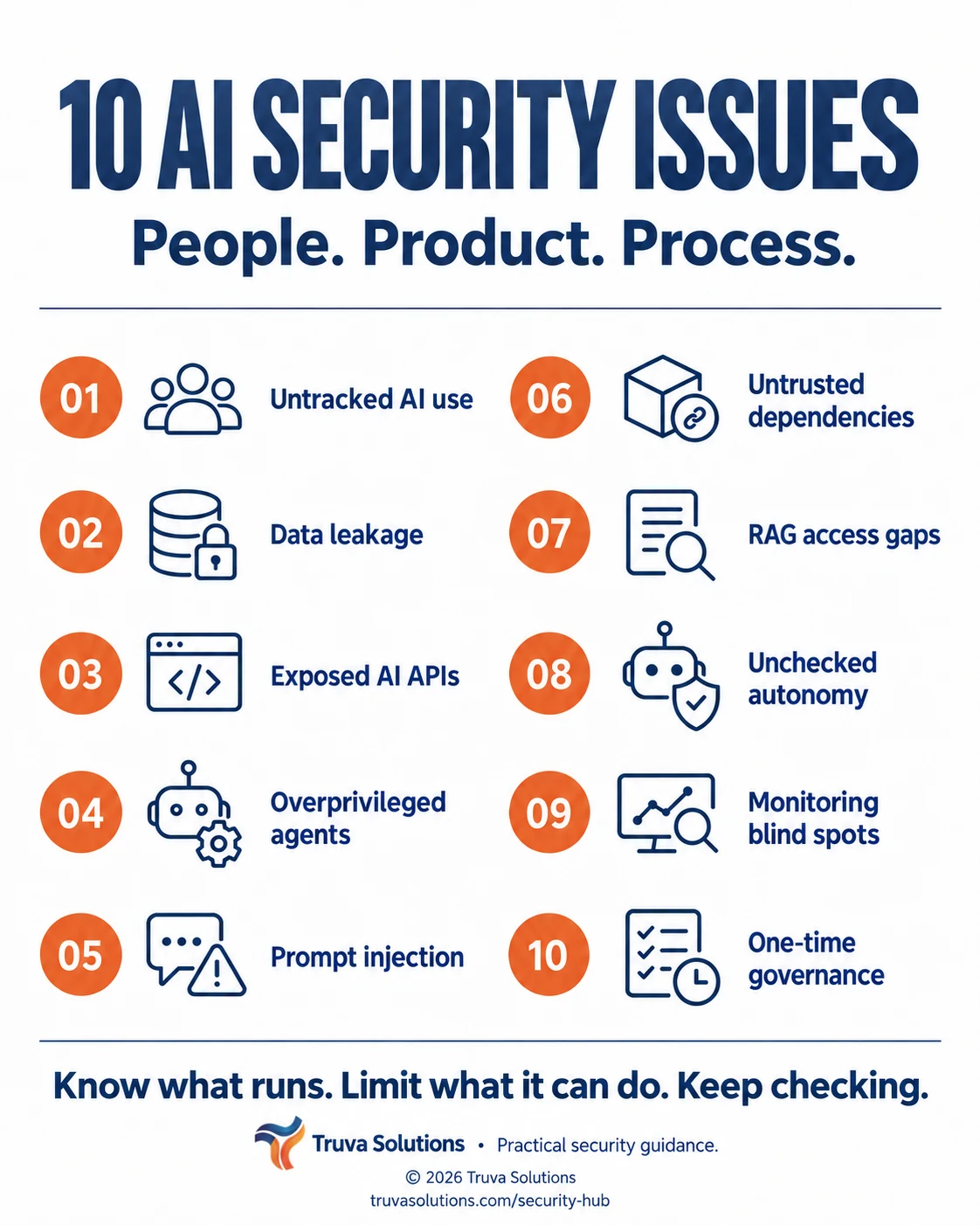
PRACTICAL SECURITY PRIORITIES

Top issues to review first

Choose a discipline, identify the risk, and start with a concrete check.

Application, agent, and system risks.

Verified issue entries are being prepared from primary sources.

PRIORITY QUEUE

Latest signals

Newest first · current snapshot

Saved snapshot · 40 advisories

Cloud & softwarecritical

Mnemosyne has JWT signature verification bypass sync server that allows authentication bypass

Summary The Mnemosyne sync server's authentication check decoded JWT bearer tokens but never verified their HMAC-SHA256 signatures. Any well-formed token was accepted, allowing an unauthenticated attacker to impersonate any user and read or modify their sync data. Severity: Critical CVSS 3.1: AV:N/AC:L/PR:N/UI:N/S:U/C:H/I:H/A:N = 9.1 Assumes the sync server endpoint is network-reachable. If your deployment is localhost-only, the score drops substantially and severity becomes High or Medium depending on local exposure. Confirm your threat model. Affected
GitHub Global Security AdvisoriesRead original ↗
Cloud & softwarehigh

AnyIO run process/open process ignores extra groups and can retain parent supplementary groups

AnyIO 4.14.0 accepts the POSIX extra groups argument on anyio.run process() and anyio.open process(), but open process() forwards the wrong variable to the backend: when extra groups is not None, it assigns kwargs["extra groups"] = group instead of extra groups. As a result, callers cannot reliably clear or set supplementary groups for child processes. In a disposable Linux container, Python's subprocess.run(..., extra groups=[]) clears a synthetic parent supplementary group list, while anyio.run process(..., extra groups=[]) preserves the parent groups.

GitHub Global Security AdvisoriesRead original ↗
Cloud & softwarecritical

AnyIO: TLSStream IDNA 2003 host name encoding enables potential TLS certificate spoofing

Impact Services using internationalized (non-ASCII) domain names are potentially vulnerable to TLS connections made from AnyIO's connect tcp() or directly via TLSStream.wrap() where the connection has (through other means) been hijacked and redirected to a malicious server. The attacker would obtain a legitimate certificate using the IDNA 2003 encoded version of the domain name and offer it to the connecting client, making the certificate validate properly on the client's end. Patches The vulnerability will be patched in v4.14.2. Workarounds Encode host

GitHub Global Security AdvisoriesRead original ↗
Cloud & softwaremedium

AnyIO process-pool workers can block indefinitely on undrained stderr

Impact AnyIO starts process-pool workers with stderr connected to a pipe but never drains that pipe. The worker redirects stdin and stdout to /dev/null to protect its protocol, but does not redirect stderr even though the documentation says all three standard streams are redirected. Worker code that writes enough attacker-influenced data to stderr can fill the pipe, block before returning the stdout protocol response, and wedge the awaiting process-pool call. Anyone who runs untrusted or faulty code that writes too much to stderr is at risk. Patches This

GitHub Global Security AdvisoriesRead original ↗
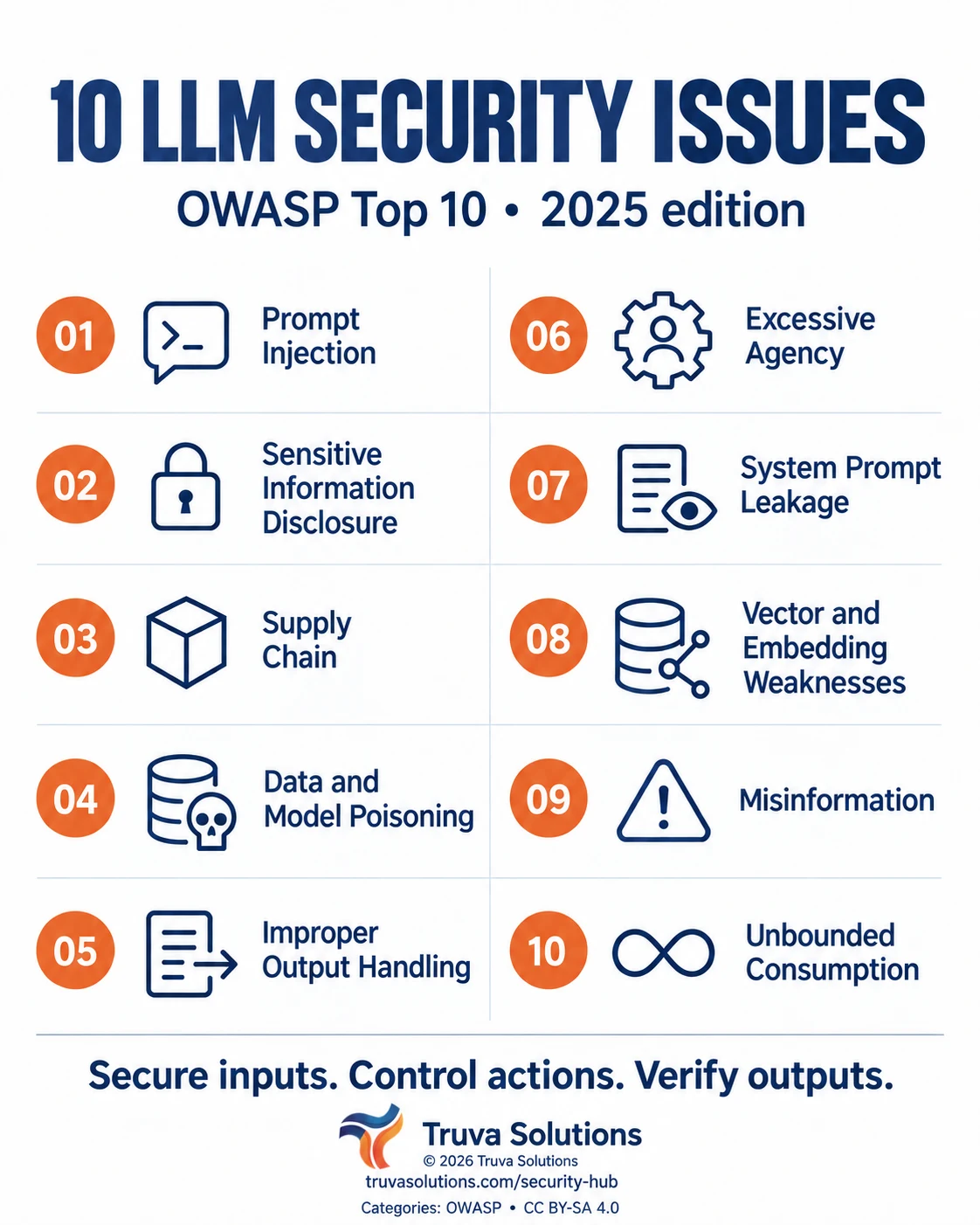
AI securityhigh

LMDeploy has an SSRF bypass

Summary The URL checking logic in lmdeploy has a logical flaw that could be bypassed by attackers, leading to SSRF attacks. Details The current lmdeploy project uses is safe url to validate the input URL. The main logic is to perform security checks on the host portion of the URL extracted by urlparse to prevent SSRF attacks. However, there are indeed differences in parsing between urlparse and the library that actually sends the request. Currently, almost all application scenarios in this project involve first using is safe url for URL validation, and t

GitHub Global Security AdvisoriesRead original ↗
AI securityhigh

LMDeploy vulnerable to arbitrary code execution via eval() of untrusted quant dtype in model config loading

Summary lmdeploy <= latest contains a code injection vulnerability in lmdeploy/pytorch/config.py line 620 that allows an attacker to execute arbitrary Python code by publishing a malicious HuggingFace model with a crafted quantization config.quant dtype value. When a user loads the model with lmdeploy, the quant dtype is passed to eval(f'torch.{quant dtype}') without any validation. Details Vulnerable code (permalink): python quant dtype = eval(f'torch.{quant dtype}') line 620 The quant dtype value comes from the model's quantization config in its Huggin

GitHub Global Security AdvisoriesRead original ↗

SIGNAL MIX

Current snapshot

40advisories
AI packagesCloud & software

Counts classify only the displayed source snapshot.

ILLUSTRATIVE POSTURE VIEW

Where a private assessment would focus.

Illustrative public example — not your environment

  • Identity
  • Exposed services
  • Data protection
  • Evidence readiness

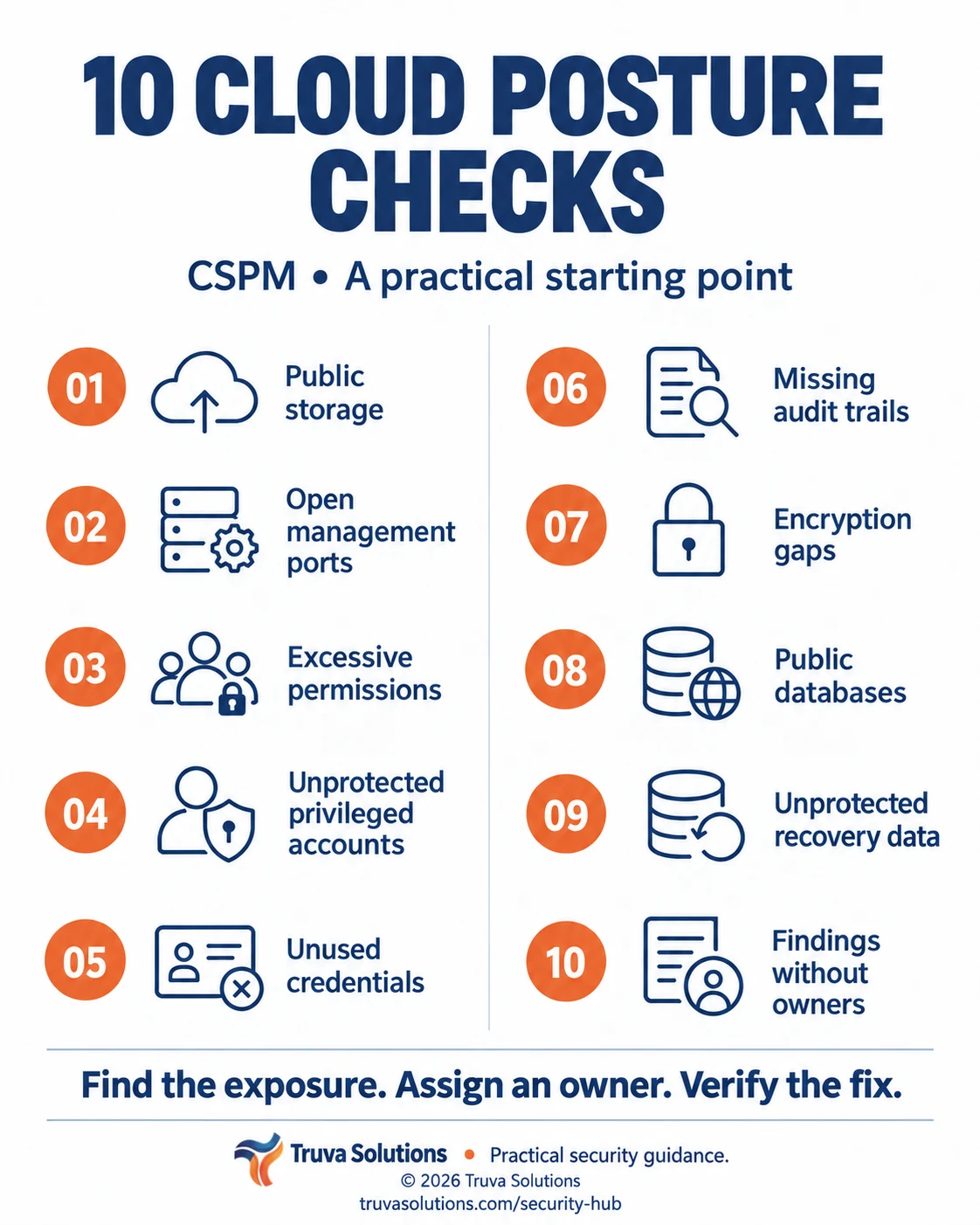
CSPM / CNAPP KNOWLEDGE

Understand your cloud security options.

CSPM helps identify cloud configuration risks. CNAPP brings multiple cloud application security capabilities together. Start with your environment, ownership and remediation workflow.

Open-source assessment

Prowler

Explore security checks, remediation guidance and compliance mappings, with CLI and self-hosted options.

Explore official resources ↗

Independent learning resources. Vendor links are not endorsements or partnership claims. Confirm capabilities and commercial terms with each provider.

Start with Truva’s cloud posture checklist →

START SMALL. MAKE PROGRESS.

Your first three checks

A starting point for a conversation—not a security score.

Mark the checks you have reviewed.

Start with customer needs and your business scope. These frameworks serve different purposes.

CUSTOMER ASSURANCE

SOC 2

An independent CPA examination of controls relevant to the selected Trust Services Criteria. It produces a report, not an ISO certification.

Read AICPA’s overview ↗
INFORMATION SECURITY

ISO 27001

Requirements for an information security management system: how you manage risks, responsibilities, and continual improvement.

Read ISO’s overview ↗
AI GOVERNANCE

ISO 42001

Requirements for an AI management system, helping organizations establish governance around developing or using AI.

Read ISO’s overview ↗
Explore Truva’s compliance services →